How to integrate Apache Airflow with OpenLineage for full data traceability
When a dashboard shows the wrong number on a Monday morning, the first question is always the same: where did this data come from, and what touched it on the way? For teams that orchestrate pipelines with Apache Airflow, the honest answer is often a manual hunt through DAG code, task logs, and tribal knowledge. To integrate Apache Airflow with OpenLineage is the practical way to replace that hunt with a map, an automatic and standardized record of every dataset a pipeline reads and writes.
Airflow runs work on schedule extremely well, but a DAG only describes the order of tasks, not the flow of data between systems. Apache Airflow concepts such as operators, tasks, and dependencies tell you which step runs next, yet they say little about which table fed which report. That blind spot is exactly where lineage tooling earns its place in a modern data pipeline.
OpenLineage is an open standard for collecting lineage metadata, hosted by the LF AI & Data Foundation. Rather than each tool inventing its own tracking, it defines a common event model that orchestrators, warehouses, and transformation tools all speak. Since Airflow 2.7, that standard ships as a first-party provider, according to the Apache Airflow documentation, so the pipelines behind your data governance effort can emit lineage without a separate agent bolted on the side.
Why Airflow pipelines lose traceability
A DAG is a graph of tasks, and that is both its strength and its limit. Airflow knows that extract must finish before transform, but by default it does not record that transform read from raw.orders and wrote to analytics.daily_sales. When a column changes upstream, no one can see the downstream reports that will break until they already broke.
The problem grows with the stack. A single pipeline might pull from Postgres, land files in S3, run a Spark job, and load a warehouse table that a BI model later consumes. Each hop lives in a different system with its own logs, so reconstructing the full path becomes archaeology. This is the same gap that turns a small schema change into the most common error in data engineering projects: work that stalls because nobody can trace impact with confidence.
Manual documentation does not survive contact with a fast-moving platform. Wiki pages go stale the moment someone ships a new Airflow DAG, and the diagram in the shared drive rarely matches production. Automatic lineage solves this because the record is generated by the run itself, not by a human remembering to update it.
What OpenLineage is and how it connects to Airflow
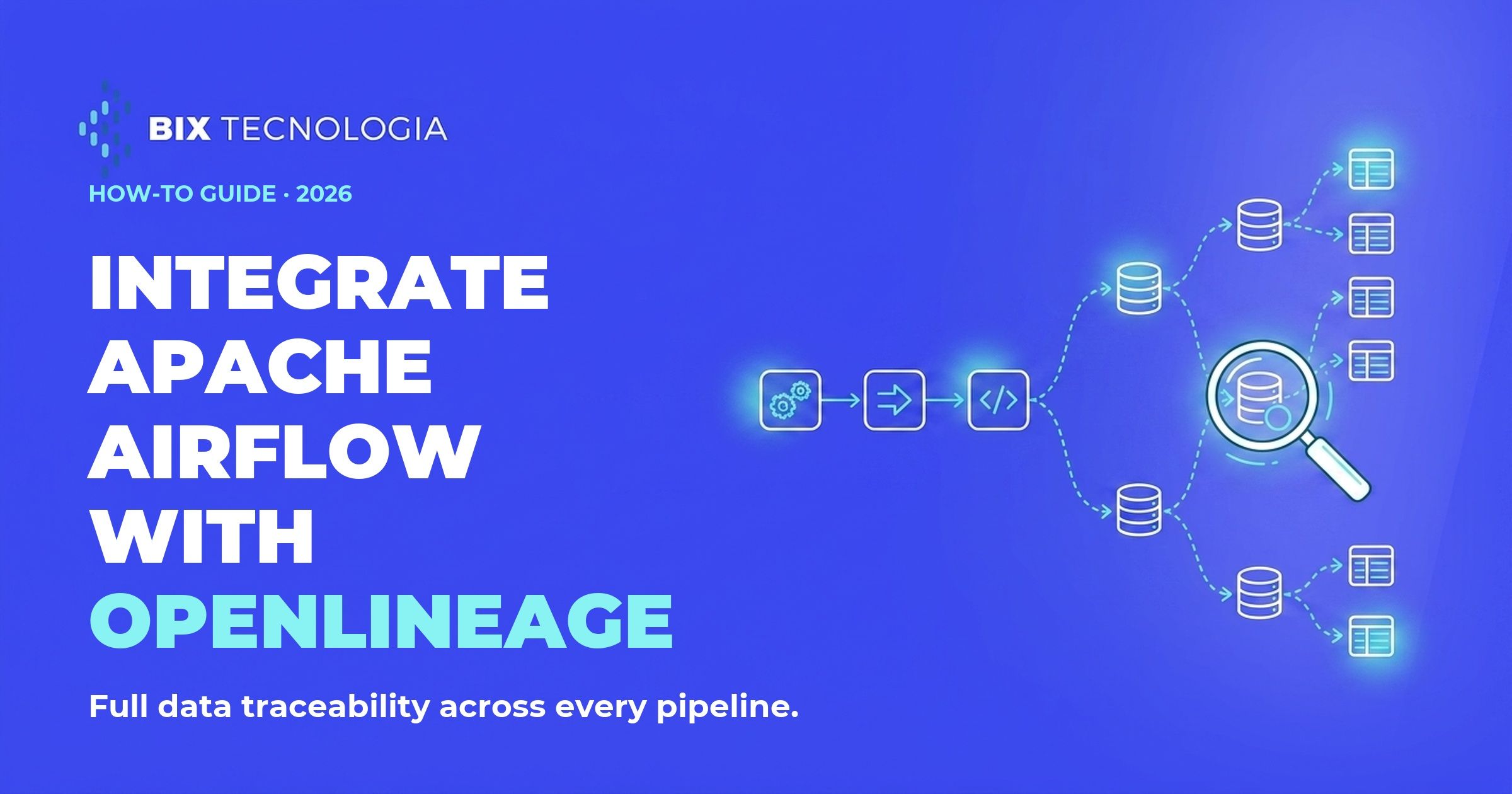
OpenLineage models three core objects: the job (the unit of work, such as an Airflow task), the run (a single execution of that job), and the dataset (the tables or files consumed and produced). Around these, it attaches facets, small pieces of structured metadata that describe schema, column-level lineage, data quality, and more. Because the model is open, any tool that speaks it can contribute to or consume the same lineage graph.
The Airflow integration turns each task execution into lineage events. When a task starts and completes, the provider emits a START and a COMPLETE (or FAIL) event describing the inputs and outputs it touched. For many built-in operators, especially SQL operators, the provider parses the query to extract source and target datasets automatically, so your choice of workflow orchestrator produces lineage as a byproduct of running normally.
Those events flow to a backend through a transport, usually HTTP. Marquez is the reference metadata backend maintained under the same foundation, while platforms like DataHub also ingest OpenLineage events, as covered in this blueprint for data governance and end-to-end lineage. The point is that Airflow stays the orchestrator and the lineage store stays separate, which keeps concerns clean and lets you swap the backend as your metadata management strategy matures.
How to integrate Apache Airflow with OpenLineage, step by step
The native provider makes the setup short. On Airflow 2.7 or later you install the provider, tell it where to send events, run your DAGs as usual, and confirm the lineage graph in your backend. The table below breaks the path into concrete steps for a team standing this up for the first time, a pattern that fits well alongside solid active metadata management.
| Step | What you do | Why it matters |
|---|---|---|
| 1. Install the provider | Add apache-airflow-providers-openlineage to your environment | Enables first-party lineage without external agents |
| 2. Set the transport | Point AIRFLOW__OPENLINEAGE__TRANSPORT (or OPENLINEAGE_URL) to your backend | Tells Airflow where to send START/COMPLETE events |
| 3. Choose a backend | Run Marquez, or route events to a catalog like DataHub | Stores and visualizes the lineage graph |
| 4. Run and verify | Trigger a DAG and open the lineage view | Confirms datasets and edges appear as expected |
| 5. Extend coverage | Add facets or custom extractors for bespoke operators | Captures lineage the default parsers miss |
Configuration lives in the [openlineage] section of airflow.cfg or in environment variables, according to the OpenLineage documentation, which suits containerized deployments where config is injected at runtime. If you already package Airflow with dbt in your transformation layer, the same standard carries lineage across both, so the graph does not stop at the orchestrator boundary.
Custom operators need a small extra step. When the built-in parsers cannot infer inputs and outputs, you implement get_openlineage_facets_on_start and get_openlineage_facets_on_complete on the operator to declare them explicitly. This is the mechanism that keeps coverage honest as pipelines grow, and it is worth treating as part of the definition-of-done for any new task in a mature data reliability engineering practice.
Turning lineage events into full traceability
Full traceability is what you get once those events accumulate into a graph. Impact analysis becomes a query instead of a meeting: before altering raw.orders, you can see every table and dashboard downstream and warn their owners first. Root-cause analysis runs the other way, from a broken report back to the exact task and run that produced the bad data.
Lineage also strengthens data quality and audit. When you attach quality facets, a failed check on a dataset travels with its lineage, so you know not just that a test failed but which downstream assets are now suspect. That connection is why teams pairing lineage with checks in Great Expectations can contain a bad load before it spreads, and why auditors get a defensible trail of how a number was produced.
None of this makes OpenLineage the only answer, and the right depth is situational. A small pipeline with three tasks may not need a full metadata backend, while a platform feeding governed lakehouse tables across many teams benefits enormously. BIX works across orchestrators, catalogs, and clouds, so the guidance is always to match the lineage investment to the real complexity of the operation, not to the hype around any single tool.
More than the specific provider, what matters is treating traceability as an architectural property of the platform, decided early and captured automatically. When you integrate Apache Airflow with OpenLineage, you turn every scheduled run into a source of truth about how data moves, which is the foundation every governance, quality, and agentic data engineering initiative eventually depends on.
If your company is scaling Airflow pipelines and needs lineage that holds up under audit and change, our specialists can help design the traceability architecture that fits your stack. Talk to our team and advance the maturity of your data. ⬇️

Frequently asked questions
What is OpenLineage and how does it work with Apache Airflow? OpenLineage is an open standard for collecting data lineage metadata, hosted by the LF AI & Data Foundation. With Apache Airflow, a first-party provider emits lineage events every time a task runs, describing the datasets it reads and writes. Those events flow to a backend like Marquez or DataHub, which builds the end-to-end lineage graph.
How do I integrate Apache Airflow with OpenLineage?
Install the apache-airflow-providers-openlineage package on Airflow 2.7 or later, set a transport that points to your lineage backend, and run your DAGs. The provider automatically extracts lineage from many operators, especially SQL ones. For custom operators, you implement OpenLineage facet methods to declare inputs and outputs explicitly.
Which Airflow version supports OpenLineage natively? Native, first-party support arrived in Airflow 2.7 through the OpenLineage provider, according to the Apache Airflow documentation. Earlier versions relied on an external integration package. Running a current Airflow release is the simplest way to get maintained lineage support without extra agents.
What is the difference between Airflow lineage and a data catalog? Airflow with OpenLineage generates the lineage events as pipelines run, capturing how datasets connect. A data catalog like DataHub stores, searches, and visualizes that lineage alongside ownership, glossary terms, and quality signals. They work together: Airflow produces the signal, the catalog turns it into governance.
Why is data lineage important for data governance? Data lineage answers where data comes from and where it goes, which is the basis of impact analysis, root-cause debugging, and audit. Without it, schema changes break reports silently and compliance becomes guesswork. Automatic lineage from Airflow keeps that map accurate because the pipeline itself generates it on every run.